AI automation cuts tasks, errors, and boosts team efficiency
AI Process Automation Services
Every AI automation project we deliver solves bottlenecks, improving reliability, accelerating decisions, and reducing manual effort.
Our TREE process shapes every AI Process Automation project. From workflow analysis to machine driven execution, we create systems that think, operate, and optimise like real team members. T R E E Think - Research - Execute - Evaluate
Before we automate anything, we think like an operations analyst. What steps repeat? Where do delays occur? Which decisions depend on human judgment? We map workflows, identify bottlenecks, and break down each task into triggers, rules, and outcomes. This thinking phase sets the foundation for accurate automation logic and ensures every system aligns with your real business processes.
We study historical process data, exceptions, edge cases, and human decision patterns. Our team analyses logs, approval chains, error types, and workflow dependencies. This research determines which tasks can be automated outright, which require AI models, and which need hybrid humans in the loop logic. The result is a clear plan for building automation that adapts, learns, and performs consistently in real environments.
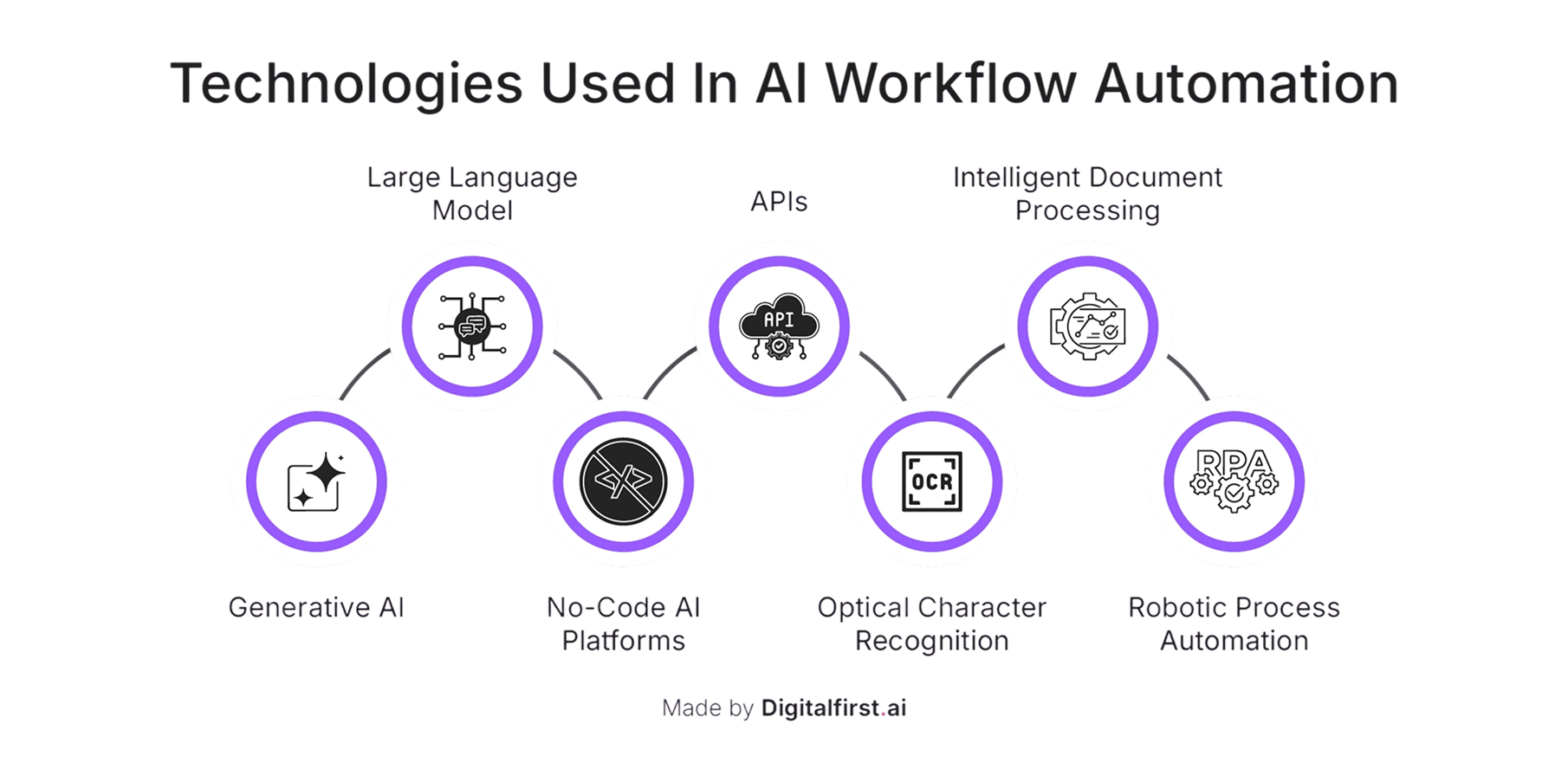
We build automated workflows using Python, RPA tools, machine learning models, and low code orchestrators depending on your use case. Whether it is document processing, request routing, or compliance validation, we create scalable workflows, structure decision rules, integrate APIs, and deploy everything in streamlined containers. Our goal is clean, fast, and dependable automation that works quietly in the background.
After deployment, we analyse automation accuracy, exception rates, latency, and overall operational impact. We review results using real process data, not just metrics, to see exactly where automation performs well and where refinement is needed. We iterate, optimise, and enhance workflows until they operate smoothly, reliably, and with measurable impact. This evaluation phase ensures your automation is not just functional but trusted across teams.

AI Process Automation is more than workflow scripts or simple task triggers. At Technolangs Solutions, we design automation systems that analyse processes, execute tasks, and make smart decisions at speed. From document handling to approval routing, every automation we build is shaped around your business rules.
This service is built for teams that want to eliminate repetitive work, reduce human error, and scale operations without adding more staff.
Good systems save time. Intelligent systems change how your business runs.
Increase Speed
Boost Workflow
Manual Workload
Clients rely on our AI process automation systems to reduce manual effort, eliminate delays, and keep operations running smoothly across teams and tools.
“Technolangs Solutions automated our invoice and approval workflows end to end. Processing time dropped by over 70 percent, and errors that used to slow us down are now rare.”
“Their automation replaced hours of daily manual work in our onboarding process. Tasks now run automatically, consistently, and without follow ups. Our HR team finally has time to focus on people.”
“We had complex approval rules across departments. Their AI automation system handled routing, validation, and escalation flawlessly. Decision cycles are faster and far more reliable now.”
“They automated customer request routing across multiple tools. Response times improved immediately, and our team stopped wasting time sorting tickets.”
“Our compliance checks used to be manual and stressful. Their automation now monitors documents, flags issues, and generates reports automatically. It changed how we manage risk.”
We design automation systems with real operational workflows in mind, ensuring accuracy, consistency, and long term performance across business critical processes.We design automation systems with real operational workflows in mind, ensuring accuracy, consistency, and long term performance across business critical processes.
Let's TalkWe build automation tailored to your exact workflows, not generic templates or one size fits all solutions.
Our engineers understand process logic, decision rules, and system dependencies across complex business environments.
Every automation workflow is tested for scale, reliability, and consistent behaviour under real operational load.
We track automation performance continuously to keep workflows accurate, efficient, and fully aligned with your evolving goals.
AI Process Automation can feel complex at first. This section breaks it down clearly. Below are the most common questions we receive about AI driven automation.
AI Process Automation involves building systems that automatically handle repetitive tasks, decisions, and workflows using rules, data, and machine learning. These systems can process documents, route requests, trigger approvals, validate information, and update systems without human input. Businesses use automation to reduce manual effort, improve consistency, and scale operations efficiently.
AI automation is used for invoice processing, customer request routing, employee onboarding, compliance checks, data entry, procurement approvals, and reporting workflows. Any process that follows repeatable steps or relies on structured decisions can be automated. It is especially valuable in operations, finance, HR, customer support, and compliance teams.
We analyse your existing workflows to identify repetition, decision rules, bottlenecks, and error prone steps. Processes with clear triggers, structured data, and defined outcomes are ideal candidates. For more complex cases, we design hybrid automation that combines AI decisions with human review where needed.
No. Automation is designed to support teams, not replace them. It removes repetitive and low value work so people can focus on strategy, judgment, and customer interaction. Many clients redeploy staff to higher impact roles after automation is implemented.
Accuracy depends on data quality, rule design, and model training. Most automation workflows achieve high reliability once tuned, often exceeding manual consistency. We monitor error rates, exceptions, and outcomes continuously and refine logic to maintain dependable performance over time.
Yes. We design workflows to detect exceptions and route them for human review or special handling. AI models can flag unusual patterns, missing data, or conflicting inputs so nothing critical slips through. Over time, these edge cases are often incorporated into improved automation logic.
Yes. We integrate automation with CRMs, ERPs, HR platforms, finance systems, and custom tools using APIs, queues, or batch processing. Whether you use Salesforce, HubSpot, SAP, Zendesk, or internal software, we ensure automation fits smoothly into your current environment.
Simple automation workflows can be delivered in two to four weeks. More complex systems involving AI decision making or multi system orchestration may take six to ten weeks. Timelines depend on process complexity, data availability, and integration requirements. We deliver in clear stages so progress is always visible.
We work with clients across eCommerce, finance, healthcare, logistics, SaaS, education, and professional services. Any industry with operational workflows, approvals, or high task volume can benefit. Each solution is tailored to industry specific rules, risks, and performance needs.
Traditional RPA follows fixed rules and scripts. AI Process Automation goes further by learning from data, making decisions, and adapting to change. It can handle variability, prioritise tasks, and improve over time rather than breaking when inputs change.
Yes. Many systems use human in the loop designs where automation handles most steps and escalates only when needed. This ensures control, accountability, and compliance while still delivering major efficiency gains.
Yes. We offer monitoring, optimisation, and maintenance services. As your business evolves, automation must adapt. We track performance, update workflows, and refine decision logic to keep systems aligned with your goals.
We use Python, machine learning models, RPA tools, workflow orchestration platforms, and cloud based infrastructure. Systems are deployed in containerised environments and integrated through APIs to ensure scalability, security, and reliability.
We do not apply generic automation templates. Every workflow is designed around your real processes, data, and constraints. Our systems are tested in live environments, reviewed for edge cases, and built to deliver long term operational value, not short term fixes.